

Your supplier ships a case. A wholesale customer buys two cases. Someone at the counter wants three pieces. The product hasn’t changed, but the way you buy and sell it has.
If your team has to stop and reconcile three product records every time that happens, a routine sale becomes an inventory project. Somebody has to know which SKU to use, which count to change, and whether the website has caught up.
The useful question is whether someone can receive the case, open it, sell a few pieces, and explain what is left without fixing the numbers somewhere else. Let’s work through it with one product.
Product & packing units
First, agree on what one unit means.
A unit of measure is the quantity attached to a transaction: one each, one pack, one case. The base unit is the common quantity you use to keep the inventory arithmetic consistent. For a product sold individually, an each is often a sensible choice.
Suppose you distribute a packaged product with six eaches in a pack and four packs in a case. This is our example throughout the guide; the numbers are illustrative.
| Unit | What it contains | Base-unit quantity |
|---|---|---|
| Each | One individual item | 1 |
| Pack | 6 eaches | 6 |
| Case | 4 packs × 6 eaches | 24 |
Receiving one case adds 24 eaches. Selling one pack removes six. The purchasing team can keep working in cases while sales works in packs or individual items.
Keep a base unit for the stock count and a defined conversion for every purchasing or selling unit. That relationship is what lets a case receipt and an individual sale update the same inventory record. [1]
Follow one receipt all the way through.
Let’s receive ten cases and then sell a mix of units. No reserved stock, damage, or other movements in this example.
| Movement | Calculation | On hand, in eaches |
|---|---|---|
| Receive 10 cases | 10 × 24 = 240 | 240 |
| Sell 2 cases | 240 − 48 | 192 |
| Sell 3 packs | 192 − 18 | 174 |
| Sell 5 eaches | 174 − 5 | 169 |
At the end, the inventory record should explain 169 eaches. A case view and a pack view are different expressions of that same stock. Adding them together would count the product more than once.
Your sales history should still show what the customer bought. Two cases should remain two cases on the order, with the associated conversion available underneath. That gives the warehouse an intelligible pick instruction and gives the customer an intelligible invoice.
A case equivalent is not always a case you can ship.
Here’s the part the multiplication doesn’t answer. In a separate stock-count example, suppose those 169 eaches are physically held as six sealed cases, four sealed packs, and one loose each. The total is correct: 144 + 24 + 1.
You have enough product to equal seven cases plus one each. You have only six factory-sealed cases. If the customer requires sealed cases, or your team cannot repack the loose packs, promising seven cases creates a problem at the loading dock.
That also means keeping location, condition, reservations, and any relevant lot or serial information attached. Product sitting in another warehouse or waiting for inspection may contribute to an on-hand total without being ready for this order.
Check how the total is assembled, too. Suppose one product is held in two lots: 12 eaches in one and eight in the other. There are 20 eaches on hand. If five are already reserved, only 15 remain available before any other holds. A summary that drops one lot, counts it twice, or ignores the reservation can look tidy and still give sales the wrong answer.
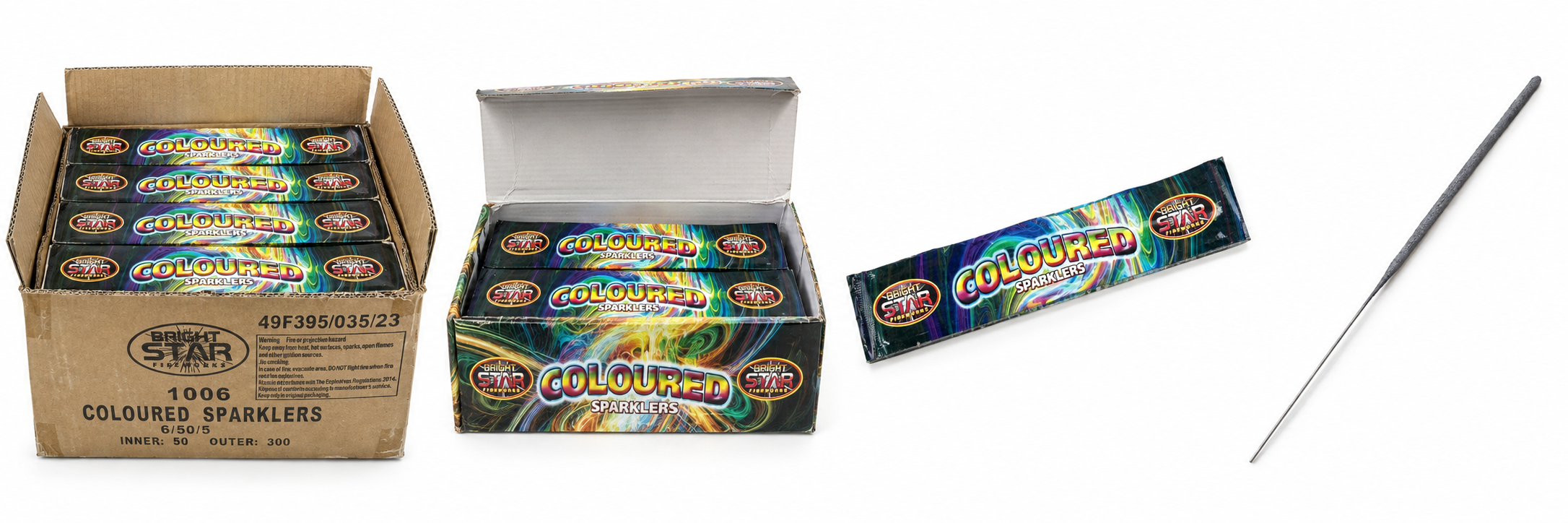
Case. Box. Pack. Each.
Bright Star · 10-inch Coloured Sparklers
Product 1006Packaging mockup
6 × 50 × 5 = 1,500 sparklers per case
The supplier’s carton uses the 6/50/5 packing code: six inner boxes, fifty packs per box, and five sparklers per pack. Product reference ↗
World Class · 10-inch Gold Sparklers
Product KM1923Packaging mockup
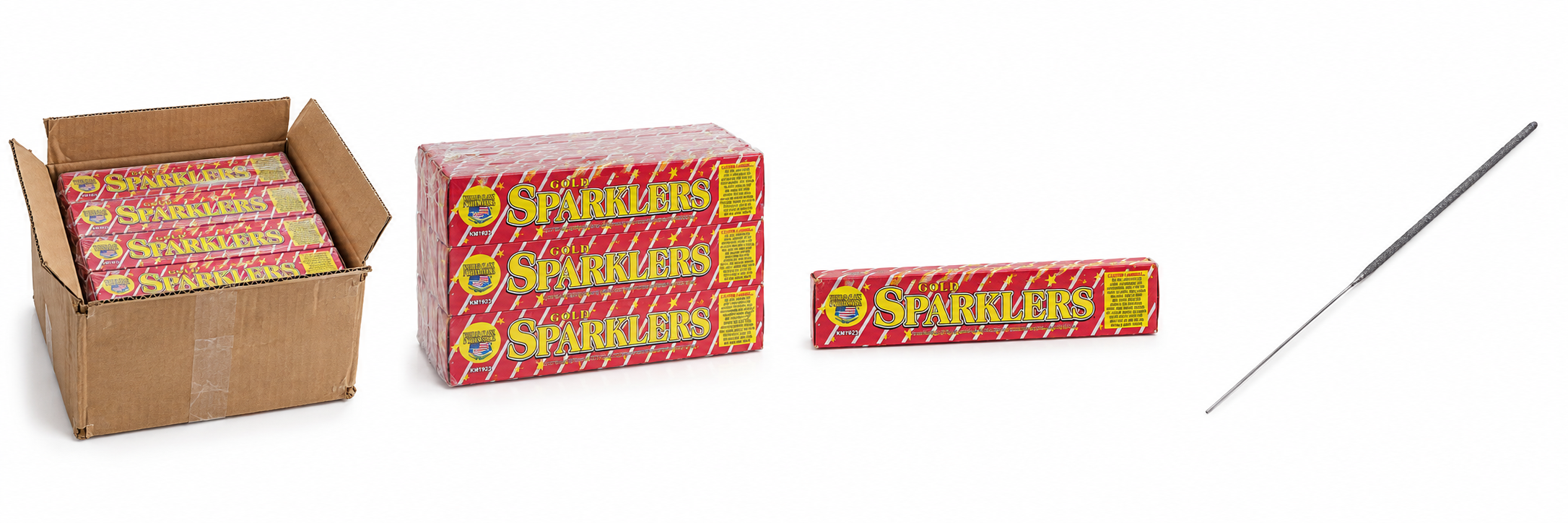
24 × 12 × 8 = 2,304 sparklers per case
Here, Box is the supplier’s wrapped bundle; Pack is its smaller retail box. Keep the supplier’s names attached to these quantities. Product reference ↗
Garbanzo · Color Pop Pop Paper Snappers
SKU 4700Packaging mockup
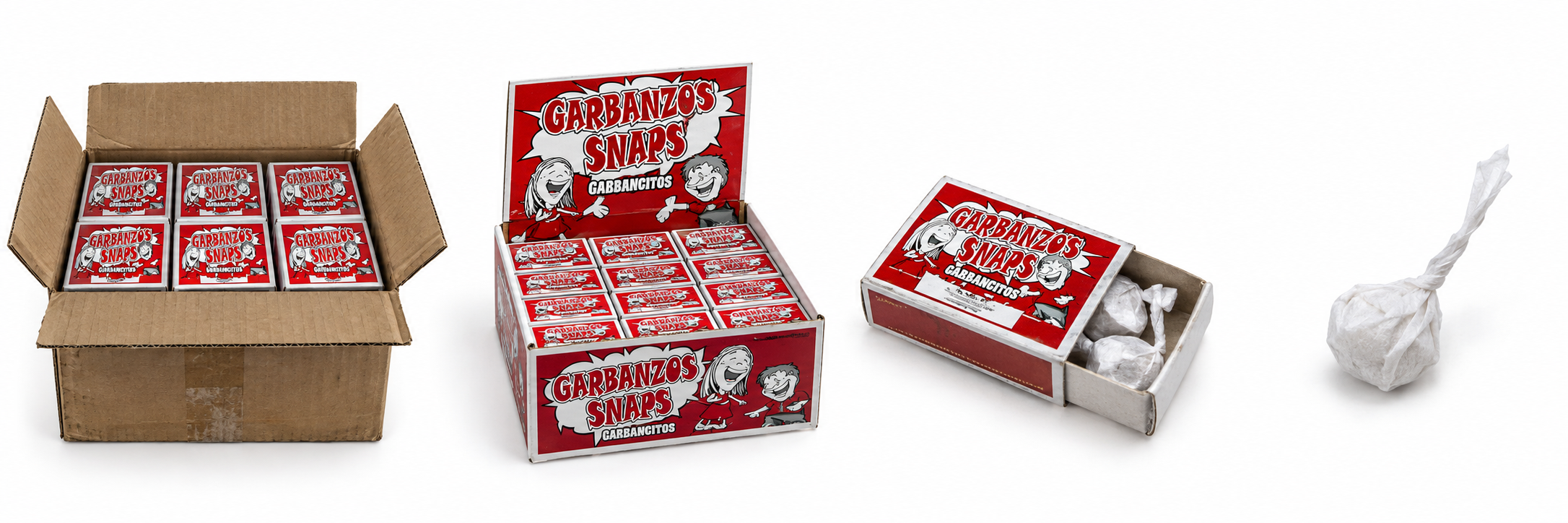
6 × 50 × 50 = 15,000 snaps per case
Here, Box is the display carton; Pack is the smaller retail box. The outer case holds six displays. Product reference ↗
Keep the identifiers your customers and suppliers need.
A connected product record does not mean every package uses the same barcode. Your internal SKU, a supplier’s item number, and a GS1 Global Trade Item Number serve different purposes.
GS1 US explains how a shipping case is created above the individual product in the packaging hierarchy and how higher packaging levels can receive their own identifiers. Preserve those relationships so a case scan is interpreted as a case. [2]
A missing supplier barcode is a setup decision, too. Agree on an internal label and connect it to the correct product and pack quantity before stock moves. Test that label on the device the warehouse actually uses.
This distinction matters when people talk about reducing SKU sprawl. The useful goal is to remove duplicate product maintenance while retaining the identifiers and packing information the business actually needs. A mixed assortment or a manufactured kit may require its own component relationships; it should not be treated as a simple multiplier of one item.
Set the selling rules alongside the conversion.
A case containing 24 eaches does not have to sell for 24 times the each price. Wholesale terms, customer agreements, and pack handling can produce different prices. The conversion tells you how much stock moves; the price rule tells you what to charge.
Record which units a customer may buy, minimum quantities, order increments, and the applicable price list. Make the unit visible on the quote and order. A correct number with the wrong unit is still a wrong order.
When a supplier changes the case quantity, give the change an effective boundary and preserve the meaning of existing receipts and orders. Quietly changing a multiplier from 24 to 20 can make yesterday’s transactions difficult to explain. We cover the commercial side in the B2B pricing guide.
Try it with the product that gives your team the most trouble.
Before changing a whole catalog, take one frequently sold product through the following sequence with someone from purchasing, the warehouse, and sales.
- Confirm the actual each, pack, and case quantities against the supplier’s packaging.
- Scan the supplier’s actual barcodes and confirm which unit each one represents.
- Receive it in the purchasing unit and check the base-unit total.
- Sell it in each allowed unit and confirm the stock reduction.
- Check an opened case, a reservation, and a transfer received short at the destination.
- Return one item and decide whether it goes back to saleable stock.
- Confirm that the order, pick instruction, invoice, and stock history still agree.
If somebody needs a side spreadsheet to finish the exercise, write down exactly where. That is a requirement you can test in your current system or in a replacement.
One product. Every movement explained.
- 01 · Receive10 cases+240 eaches
- 02 · Sell cases2 cases−48 eaches
- 03 · Sell packs3 packs−18 eaches
- 04 · Sell eaches5 eaches−5 eaches
169 eaches remain
How we approach it at NicklOne.
NicklOne connects buying and selling units to a shared product record across purchasing, inventory, and sales. The purpose is straightforward: let the team transact in the units the business uses without rebuilding the product each time. Explore the platform’s product and unit relationships.
The published Hootin Owl story shows how piece, pack, box, and case relationships connect with location inventory and pricing.
Bring us one product, its actual pack sizes, and an order your team finds awkward. We can walk through the receipt, sale, and remaining stock together. You’ll see where the workflow fits, and what needs to be configured, before discussing a wider change.
References & further reading
These sources explain the inventory, pricing, and evaluation concepts discussed above. External documentation is included for background; it is not a software recommendation. Examples and checklists are illustrative.
- Microsoft Learn — Set up item units of measure Base and alternate units and conversion quantities.
- GS1 US — Create a shipping case Packaging hierarchy and shipping-case identifiers.
- NicklOne — Product operations platform NicklOne’s public product and unit model.
- NicklOne — Hootin Owl customer story Published example; no additional customer outcome claimed.
Sources checked September 8, 2026.
Photography
- Galactic Fireworks — Bright Star Coloured Sparklers · Product referenceSupplier photographs and listing used as references for the illustrative packaging mockup.
- Utah Sparklers — World Class Gold Sparklers · Product referenceSupplier photographs and listing used as references for the illustrative packaging mockup.
- Kellner’s Fireworks — Garbanzo Snaps · Product referenceSupplier photographs and listing used as references for the illustrative packaging mockup.
The four-level product visuals are AI-generated packaging mockups based on these references. Packaging details and visible contents are illustrative; supplier unit quantities are stated separately. Each loose item is shown unlit.